
You can see a pdf of the complete Volunteers Handbook on this link Naturewise Handbook (Final)
How You Can Help Out (Roles and Activities)
Areas to Get Involved
Our main volunteer days are every Tuesday and 3rd Saturday of the month Saturday from 10 am – 4 pm. While these regular sessions are central to the garden’s success, there are also many other valuable ways you can get involved, often outside of these hours, which include:
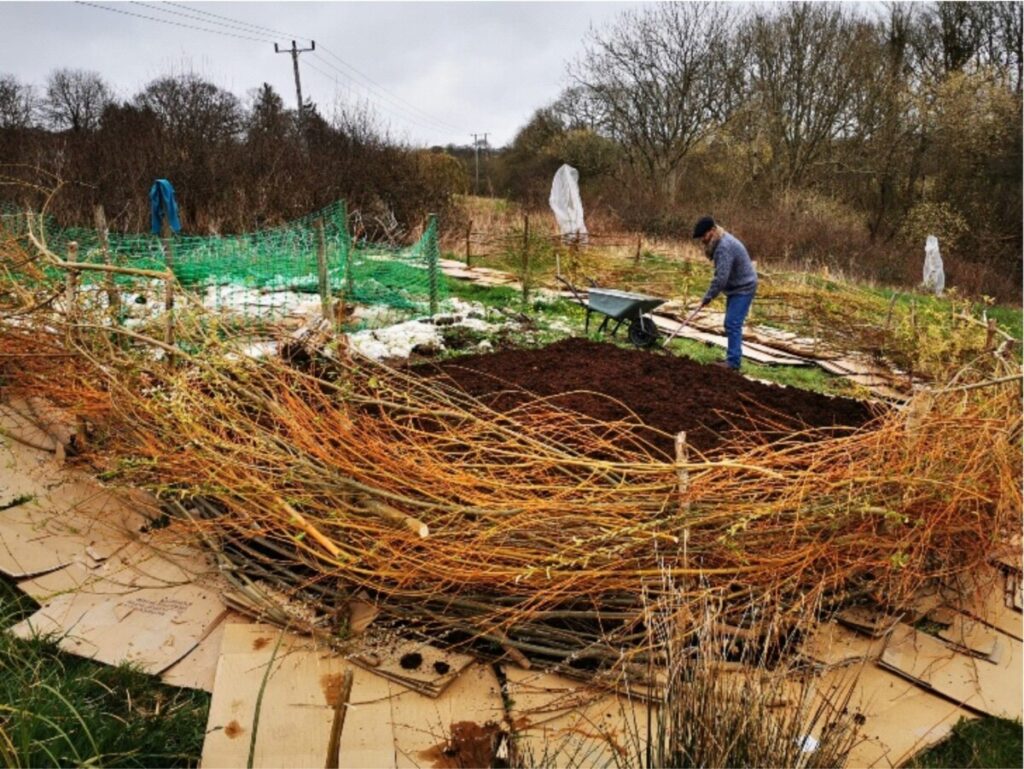
Garden Maintenance & Development: Hands-on work in the 5-acre community forest garden. (typically during main volunteer sessions).
Tasks vary according to the season and can include:
- Weeding, mulching, planting, sowing seeds, pruning tree and fruit bushes, clearing brambles, shovelling & barrowing compost, woodchip & manure.
- General maintenance tasks, fitting bird boxes, painting wood work, mending things, sweeping, fencing, dead hedging, trimming branches.
- Labelling, organising & recording tools, books & equipment.
- photographing & labelling plants & wildlife
- weighing & recording produce
- picking produce, cooking produce for either chutney or community open days or special events
- Manning stalls at events, making tea , making cakes.
See also our current roles on Volunteering Wales here: Outdoor gardening & conservation Volunteer – Opportunity – Volunteering Wales
Community Engagement: Raising awareness of our work at local events and through promotion.
Writing an article, outreach work, talking about your experience as a volunteer, visiting a school or another organisation.
Administration & Outreach: Helping with behind-the-scenes tasks like admin or social media.
Helping with the website, face book, posters, ideas, typing up meeting notes, sending out annual agreements, overseeing accounts with a member of staff who keeps the accounts, planning tasks and costing them, looking for grants, developing writing for grants.
Planning: Contributing your ideas toward the long-term development of the garden.
Attending planning meetings, doing research, writing, gathering ideas, collating feedback.

We are happy to welcome you, no matter how much time you can offer!
Every moment you give makes a difference
Benefits of Volunteering at the Garden
Volunteering is a two-way street. Here are some of the ways you can benefit from spending time with us:
- Health and Wellness: Boost your health by spending time in the fresh air and engaging in physical activity. Volunteers report better physical health than non- volunteers. Volunteering reduces stress and anxiety, isolation and improves self -esteem. Reduced stress further decreases the risk of some physical and mental health problems, such has heart disease, stroke, depression, anxiety and general illness. In addition, people who volunteer have lower mortality rates than those who do not. You will have access to food grown with out harmful chemicals,

- Skills Development: Learn new practical skills or practice and maintain the skills you already have. For volunteers there are many opportunities to expand your skills and learning. Recently volunteers made 2 gates from green wood with hand tools. We’ve planted up 2 ponds, made a dead hedge, used billhooks, saws, chopping blocks. Learnt pruning with Martin Hayes a local expert. We’ve made fire cider a medicinal plant preparation and continue to develop our knowledge and skills in the development of the garden.
- Career Growth: Gain valuable experience that helps prepare you for the workplace or a new career path. Working in a team, on the land, with trees, plants, edibles, medicinal plants, soil health, mulches, polytunnel, ponds, hedges, berries, fruit, salves, planning, events, talks, posters and many more tasks all can boost your skill levels and capacity to gain employment.
- Community and Fun: Socialise, meet new people, and have fun with a diverse range of people. The team are very good at making you feel comfortable and welcome. We engender an environment of respect for each other. People often offer support, friendship, and activity ideas outside of the garden. So, it can be a place to expand your social wellbeing and find out what’s going in the area around you.

- Making an Impact: Make a positive contribution to the sustainability and well-being of the land and community. Creating a lasting legacy of abundance of food grown without chemicals, flying, and plastic. Grown with nature wellbeing at heart. Witness the gardens development, its beauty and abundance. Doing something meaningful can contribute to resilience against feelings of despair or overwhelm with how nature is being treated. Be around people who want to contribute, see the impact.
Our Mutual Agreement and Commitment
Your time with us is based on trust and mutual understanding, not a legal contract. This important difference gives both you and Naturewise the flexibility we need to thrive.
Our commitment to you:
- To have clear information about what is and is not expected of them
- To receive adequate support and training relevant to role
- To be insured and to volunteer in a safe environment
- To be treated with respect and in a non-discriminatory manner
- To receive out of pocket expenses
- To have opportunities for personal development
- To be recognised and appreciated
- To be able to say ‘no’ to anything which they consider to be unrealistic or unreasonable
- To know what to do if something goes wrong
Your Commitment to Naturewise:
- To be reliable and honest
- To uphold the organisation’s values and comply with organisational policies
- To make the most of opportunities given, e.g. for training, mentoring etc.
- To contribute positively to the aims of the organisation and avoid bringing the organisation into disrepute
- To carry out tasks within agreed guidelines